The STCW Personal Survival Techniques (PST), also known as the sea survival course, provides knowledge of essential prevention and survival techniques. It includes both theoretical and practical sessions, investigating causes of distress, knowledge and use of equipment, launch and recovery of life rafts, preparation for survival, personal survival skills and use of search and rescue organisations
Course Details
Duration
1 Day (0900hrs – 1700hrs).
Prerequisites
None. This module is suitable for beginners and is a mandatory requirement for all seafarers. Participants must be aged 16 or over.
Certification
Upon successful completion, candidates receive an MCA approved STCW certificate, valid for 5 years:
- Personal Survival Techniques (STCW A-VI/1-1)
Booking Info
Cost
£168.00 inc vat (Please note all prices include VAT @ 20%)
Location
South West Maritime Academy,
Cromhall Quarry, Cromhall, South Gloucestershire, GL12 8AA
Cromhall Quarry, Cromhall, South Gloucestershire, GL12 8AA
Looking to revalidate an existing certificate?
View PST Refresher CourseEssential Sea Survival Training: Personal Survival Techniques
The STCW Personal Survival Techniques (PST) course, often referred to as Sea Survival training, is a vital cornerstone of maritime safety. This module provides seafarers with the essential knowledge and practical skills required to survive in the event of ship abandonment. As a core component of the STCW Basic Safety Training package, this certification is mandatory for anyone looking to work professionally aboard superyachts, cruise ships, or merchant vessels.
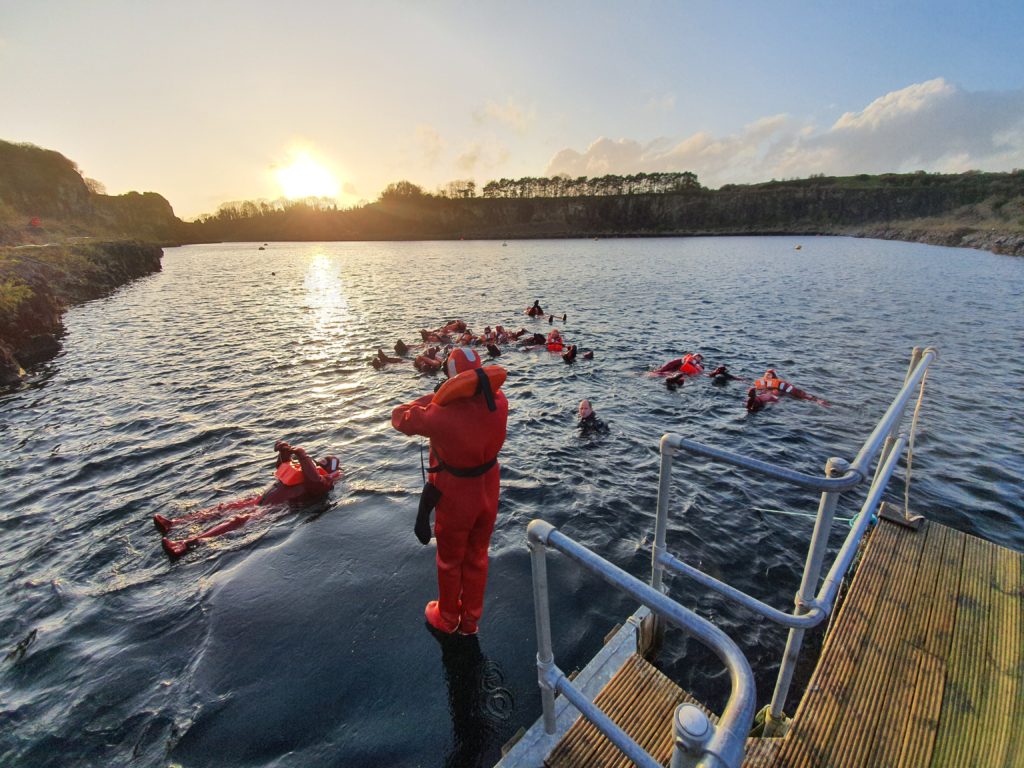
At South West Maritime Academy, we don't just teach the theory—we immerse you in it. Our practical sessions take place at our specialist facility at Cromhall Quarry, providing a realistic, high-fidelity environment where you can practice life-saving drills in conditions that mirror the physical and mental demands of the open sea.
This course is one of two STCW modules that require mandatory STCW 2010 Update training every five years to ensure your skills remain current and compliant with international maritime law.
Theoretic Knowledge
- Emergency Scenarios: Understanding types of distress such as collisions, fires, and sinking.
- Life-Saving Appliances: Overview of equipment normally carried on commercial vessels.
- Survival Craft: Detailed look at the equipment and rations found within life rafts.
- Personal Equipment: Correct location and donning of personal life-saving appliances.
- Survival Principles: The psychology and core principles of survival at sea.
Practical Instruction
- Donning life jackets and immersion suits correctly.
- Safely entering the water from a height (abandonment drills).
- Righting an inverted life raft while in the water.
- Boarding a life raft from both the water and a simulated ship side.
- Swimming techniques and staying afloat while wearing a life jacket.
- Initial actions upon boarding a life raft to enhance survival.
- Deployment of drogues (sea anchors) and operating location devices/radio equipment.
Personal Survival Techniques FAQ
What is the STCW Personal Survival Techniques (PST) course?
The STCW Personal Survival Techniques (PST) course, often referred to as Sea Survival, is a mandatory 1-day module for all seafarers. It provides the essential knowledge and practical skills required to survive at sea following ship abandonment, covering life-saving appliances, life raft drills, and emergency protocols.
Is STCW PST the same as an RYA Sea Survival course?
While both cover survival at sea, the STCW PST is the international standard required for commercial work on vessels over 24m, cruise ships, and superyachts. The RYA course is typically geared towards recreational boaters. Most professional maritime careers require the STCW PST module.
Do I need to be a strong swimmer for the PST module?
No. You do not need to be a competitive swimmer, but you should be comfortable in the water. During the practical drills you will be wearing an immersion suit.
What should I bring for the PST practical water session?
You will need to bring thick socks and a change of clothes for the practical session. Warm clothing is also advised, especially during colder months. South West Maritime Academy provides all specialist safety equipment, including immersion suits and lifejackets, for the duration of the training.
How long does the PST certificate last?
The STCW PST certificate is valid for 5 years. Under the STCW 2010 Manila Amendments, you must complete an STCW PST Refresher course before the expiry date to remain compliant for work at sea.
How much does a Personal Survival Techniques course cost?
As a standalone 1-day module, the PST course is priced at £168.00 inc VAT. Many students choose to book this as part of our full STCW Basic Safety Training package for a comprehensive safety qualification.
Is the PST course physically demanding?
The course involves a moderate level of physical activity, including entering the water from a height and righting an inverted life raft while in the water. Participants should be in good health and medically fit to participate in these drills.
Can I book Personal Survival Techniques as a standalone module?
Yes. While it is Day 2 of our standard BST week, we offer the PST course as a standalone 1-day option. This is ideal for those who only require this specific certificate or are completing their update training separately.
STCW Basic Safety Training
Personal Survival Techniques is one of the five mandatory modules required to complete your STCW Basic Safety Training (BST). Explore the other modules below:
Contact & Accommodation
Contact Us
Please contact us if you require further information or wish to book on behalf of a company:
Telephone: 01454 260130
Email: info@southwestmaritimeacademy.com
Telephone: 01454 260130
Email: info@southwestmaritimeacademy.com
Normal Office Hours (UK Time):
Monday – Friday: 08.30 – 17.00
Monday – Friday: 08.30 – 17.00
Accommodation
There is a wide range of local accommodation, some of which are within walking distance of the training centre, to suit everyone’s budget.