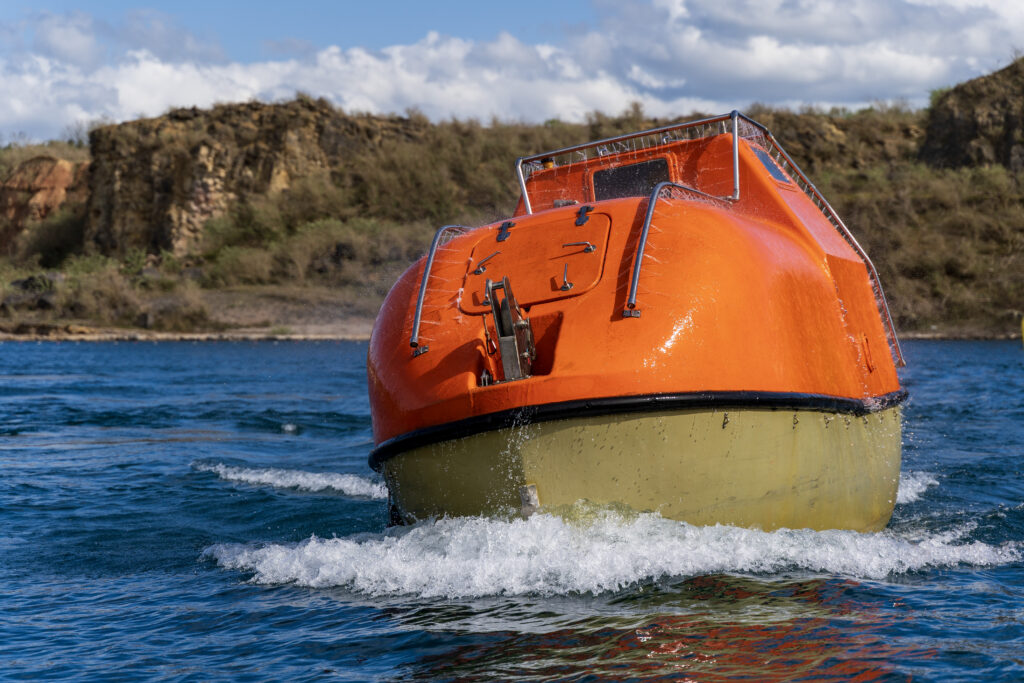
Master the essential skills required for maritime emergency response with our MCA-approved PSCRB course. Combining advanced classroom theory with intensive, practical open-water operations, our Proficiency in Survival Craft and Rescue Boats training provides the ultimate hands-on preparation for shipboard coxswains and safety command crews.
PSCRB Course Details
- STCW Regulation VI/2, paragraph 1
- Section A-VI/2, paragraphs 1 to 4 of the STCW Code 1978, as amended
Booking Info
Cromhall Quarry, Cromhall, South Gloucestershire, GL12 8AA
Is your PSCRB about to expire?
Book Our 1-Day UPSCRB RefresherWhat is the Proficiency in Survival Craft and Rescue Boats Course?
The Proficiency in Survival Craft and Rescue Boats framework is a detailed four-day syllabus combining classroom theory with intensive, hands-on water deployment. This specialized PSCRB course provides essential skills for mariners stepping into a coxswain role, or those explicitly tasked with launching and crewing lifeboats and survival craft in shipboard emergencies.
Sometimes historically referred to by mariners as advanced sea survival training or the CPSC (Certificate of Proficiency in Survival Craft), the true core objective of the pscrb course is to fully prepare crew members for sudden vessel abandonments or complex man-overboard recovery situations. We ensure all candidates leave completely competent and confident to launch, manage, and safely maneuver rescue vessels under pressure.
1. Launch & Craft Take-Charge
Master the foundational leadership skills required to take command of a survival craft or rescue boat during and immediately after deployment loops.
- Davit Release: Comprehensive knowledge of on-load and off-load structural hook configurations.
- Crew Management: Safely organizing survivors, assigning roles, and maintaining structural order inside the vessel.
2. Engine & Power Plant Operations
Acquire practical, mechanical operations knowledge for marine propulsion systems commonly found in survival crafts.
- Motor Commands: Starting sequences, cold-start protocols, and basic water troubleshooting.
- Fuel & Systems: Managing on-board fuel allocations, emergency tools, and charging parameters.
3. Post-Abandonment Protocols
Understand the precise physical, logistic, and mental requirements of navigating open water following an emergency evacuation.
- Vessel Handling: Managing sea anchors, row patterns, and avoiding hull side collision vectors.
- Rationing: Precise distribution mechanics for emergency clean water and provisions.
4. Signalling Arrays & Location Aids
Maximize the capability of your survival craft to be identified swiftly by international Search and Rescue (SAR) configurations.
- Comms Hardware: Safe operation of marine EPIRBs, SART units, and portable two-way radios.
- Pyrotechnics: Secure, effective deployment of handheld flares, rocket parachute signals, and smoke arrays.
5. Casualty Management & First Aid
Fulfill the emergency first aid elements integrated within the MCA approved four-day syllabus.
- Hypothermia: Clear treatment workflows for exposure, cold shock, and drowning.
- Trauma: Basic wound stabilization and shock management within restricted hull parameters.
Natural Career Progression
Once you successfully complete your PSCRB training and gain MCA accreditation, you unlock advanced maritime career avenues:
Next Practical Step:
STCW Proficiency in Fast Rescue Boats (FRB) CourseThe South West Maritime Academy Advantage: Realistic PSCRB Training
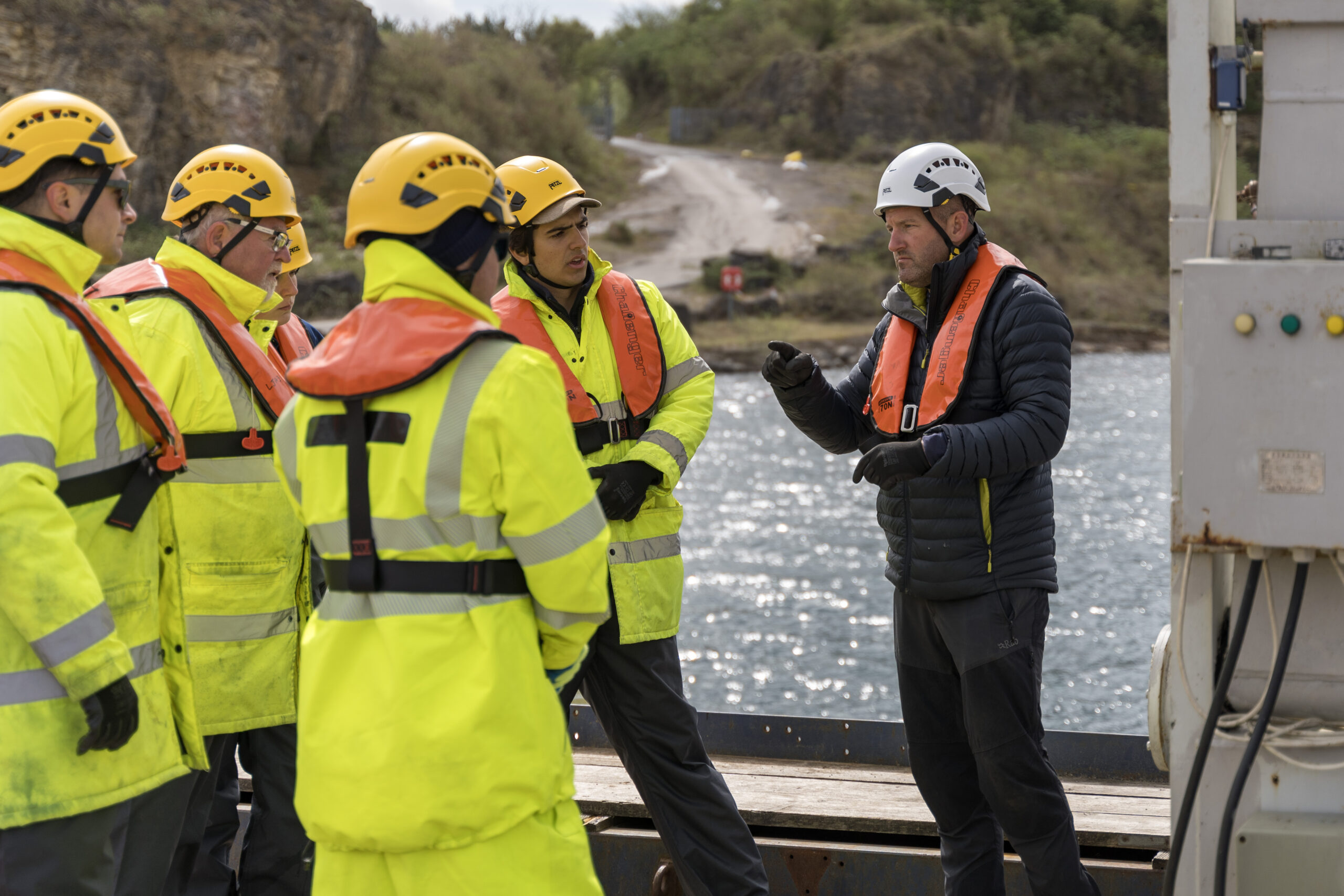
While many training centres rely on simulated indoor heated pool environments, South West Maritime Academy hosts practical drills on our real-world open water lake at Cromhall Quarry.
Our dedicated lifeboat launch stations, davits, and rescue boats guarantee realistic training sessions. Choosing our PSCRB course prepares you perfectly for real maritime conditions.
Entry Requirements and Target Audience
This PSCRB course is designed for professional crew progression tracks, commercial deck hands, yacht officers, and offshore professionals moving into designated safety roles. It focuses extensively on leadership and launch safety variables.
Please note that this curriculum contains several practical exercises that are physically demanding. Any candidate unsure of their medical or physical fitness should consult a physician prior to booking onto the PSCRB training. Full attendance across the entire 4 days is required to secure accreditation.
- Minimum Age: Candidates must be at least 16 years of age.
- Prerequisite Training: Must hold an approved STCW Personal Survival Techniques (PST) or Updated PST certificate completed within the last 5 years.
- Sea Service Requirement: A minimum of 6 months of verified seagoing service is required.
- Sea Service Waiver Option: Individuals who have not yet achieved the 6-month threshold may still complete the PSCRB, but the certificate will not be awarded until proof of sea service is provided.
PSCRB Frequently Asked Questions
What does PSCRB stand for in maritime training?
Is this PSCRB course approved by the MCA?
How long does a PSCRB certification remain valid?
What is the exact difference between PSCRB and CPSC?
Can I attend the training if I don't have 6 months of sea service?
Where can I find MCA-approved PSCRB training near Bristol?
Do I need to take this course if I want to operate a Fast Rescue Boat?
STCW PSCRB Refresher Revalidation
Maintain your professional compliance. If you already hold a valid initial certificate, you do not need to retake the full four-day course. We offer an accelerated, MCA-approved 1-Day Refresher package to renew your credentials swiftly and efficiently before your 5-year limit expires.
View 1-Day UPSCRB Refresher CourseContact & Accommodation
Contact Us
Telephone: 01454 260130
Email: info@southwestmaritimeacademy.com
Monday – Friday: 08.30 – 17.00
Accommodation
There is a wide range of local accommodation, some of which are within walking distance of the training centre, to suit everyone’s budget.